Why is Himalayan salt pink?
· 6 min read
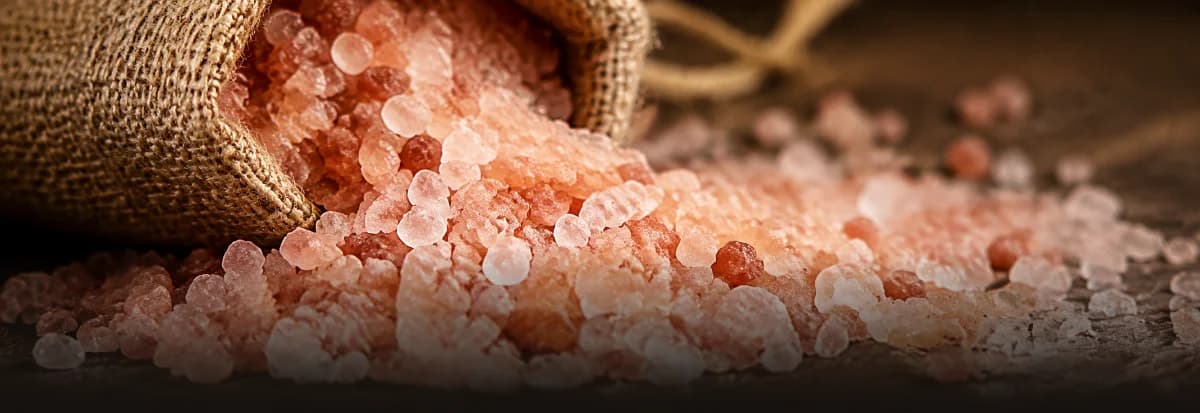
Himalayan salt is pink because of iron oxide — rust, essentially — held in trace amounts within the halite crystal. Pure sodium chloride is colourless or white. As the ancient seabed that became the Salt Range was buried and compressed, iron-bearing minerals were incorporated into the crystal lattice, and the oxidation state of that iron is what produces everything from pale peach to deep brick red.
The colour varies by seam, not by quality
This is the part most buyers get wrong. A deeper red does not mean a purer or more mineral-rich salt. It means the crystal came from a seam with more iron. Two blocks cut a few metres apart in the same mine can differ visibly, and both are chemically almost identical — well over 95 percent sodium chloride with trace minerals making up the remainder.
If a supplier tells you their salt is darker because it contains more minerals, treat the rest of their technical claims with caution. Colour tracks iron content, and iron is one trace element among many.
What the colour does tell you
- Consistency of sorting — an unsorted pallet spans the full range and looks chaotic on a shelf
- Which seam and depth the batch came from, useful for repeat-order matching
- Suitability for backlighting: paler, more translucent crystal transmits light far better
- Whether the batch has been washed — surface dust mutes and greys the colour
White, pink and red in one mine
The Khewra range produces three broad colour families. White or near-colourless salt comes from seams with minimal iron and is often the purest by assay. Standard pink is the commercial mainstream and what most people picture. Deep red comes from iron-rich bands and is prized decoratively — for lamps especially, where the colour is the product.
| Colour family | Typical use | Notes |
|---|---|---|
| White / off-white | Edible, pharmaceutical-grade | Often highest NaCl purity by assay |
| Light pink / peach | Backlit tiles, translucent slabs | Best light transmission |
| Standard pink | Edible, bath, general lamps | The commercial mainstream |
| Deep red | Decorative lamps, feature stone | Iron-rich; lower translucency |
Why it matters commercially
If you are buying tiles for a backlit wall, colour is a functional specification, not an aesthetic preference — dense red crystal will not glow evenly no matter how good the lighting behind it. If you are buying lamps, colour consistency across a display is the single most visible difference between a professional supplier and a cheap one. And if you are buying edible salt, colour is largely irrelevant to quality and you should be reading the certificate of analysis instead.
Looking for the commercial detail?
See our edible salt grades