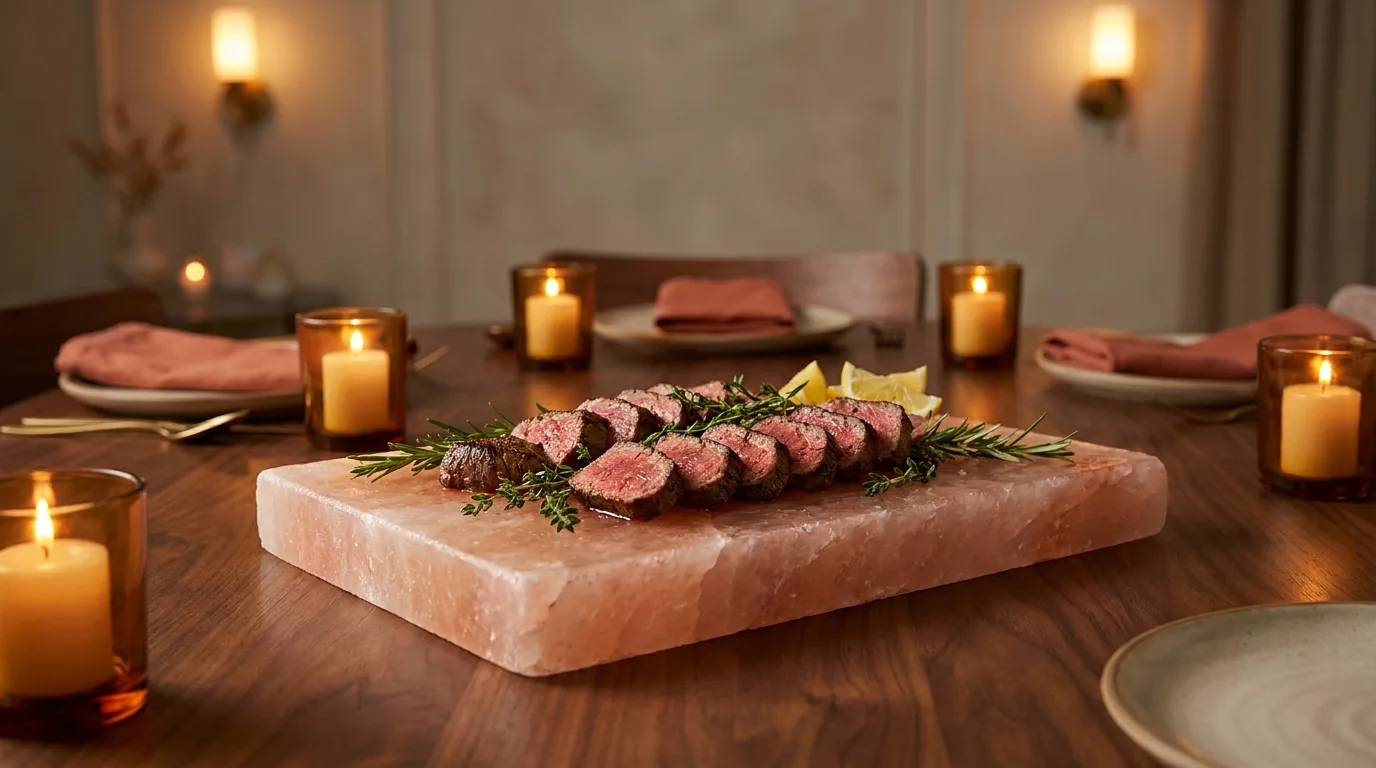
BBQ grilling slab
12"×8"×2" · 12"×12"×2"
The workhorse barbecue plate. Two-inch thickness resists cracking over open flame and holds searing heat long enough for a full service.
Loading…
Cookware & BBQ Slabs
Thickness-graded slabs cut from dense, low-fissure crystal — the grade that survives repeated heating instead of splitting on its second use.
Direct-heat rated, cut from dense low-fissure crystal. Every unit is thickness-checked before packing — under-thickness blocks fail on the grill and generate returns.
12"×8"×2" · 12"×12"×2"
The workhorse barbecue plate. Two-inch thickness resists cracking over open flame and holds searing heat long enough for a full service.
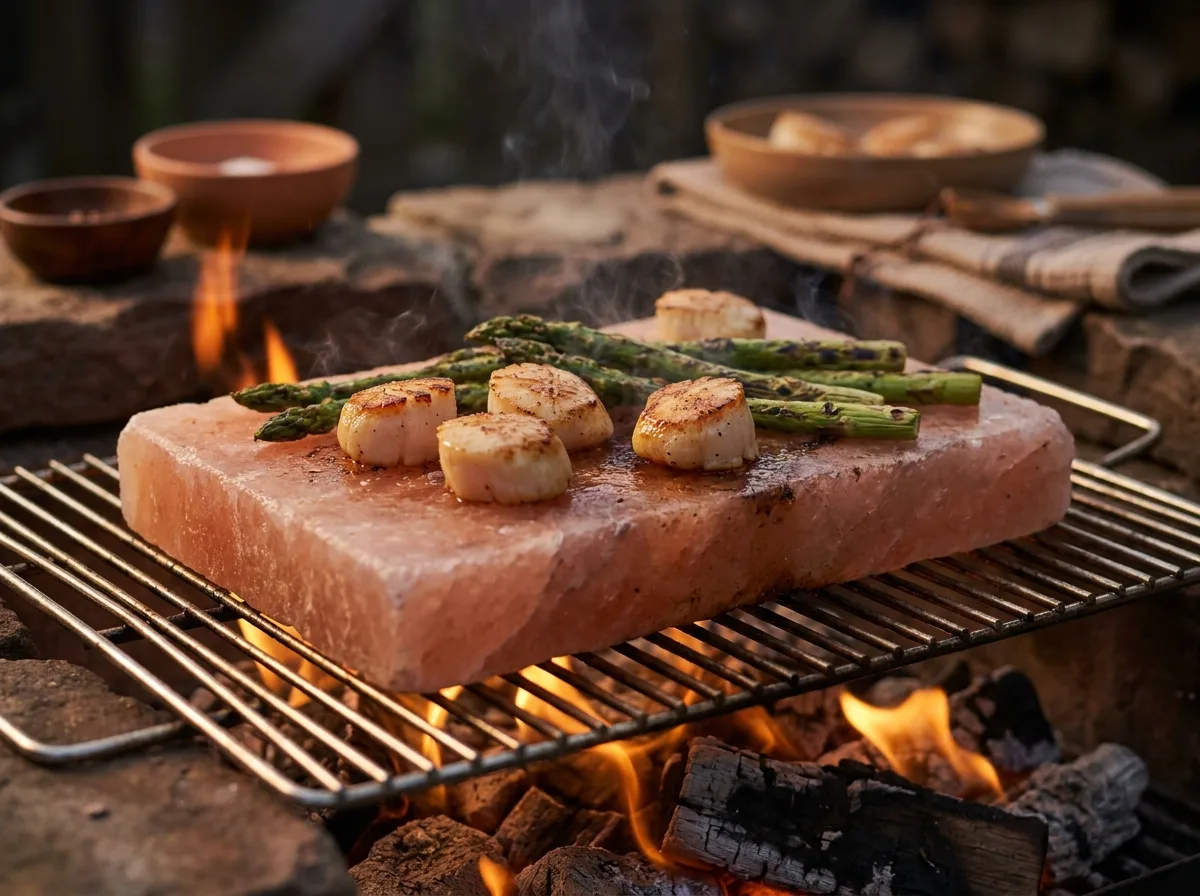
8"×8"×2" · 10"×10"×1.5"
Sized for domestic hobs and ovens. Sears steak, prawns and vegetables, or chills for sashimi and carpaccio service.
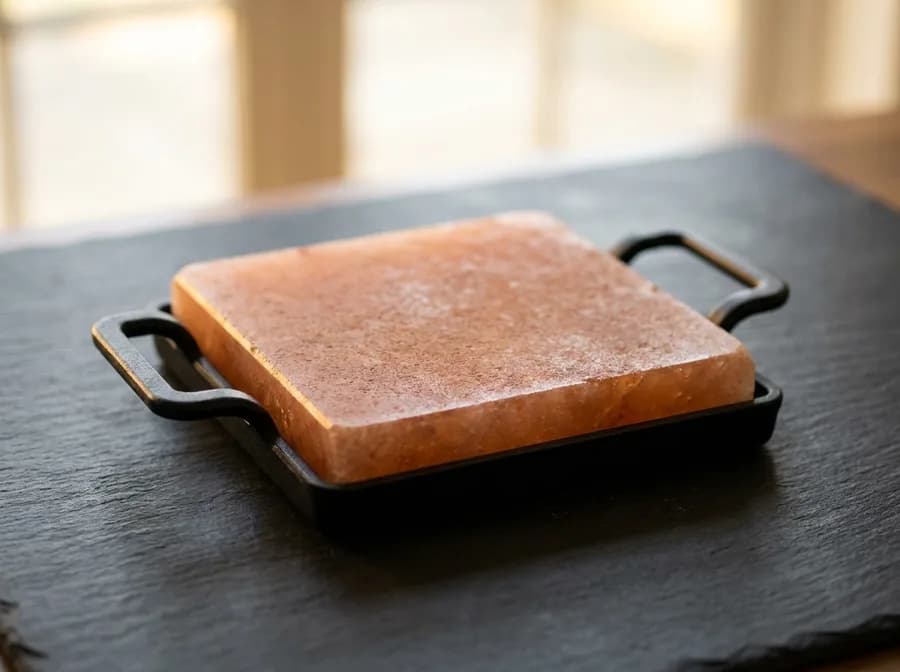
10"×10"×1.5" in cast-iron holder
A salt plate seated in a cast-iron frame with handles, so it can be carried hot from hob to table. The frame also contains the block as it thins with use.
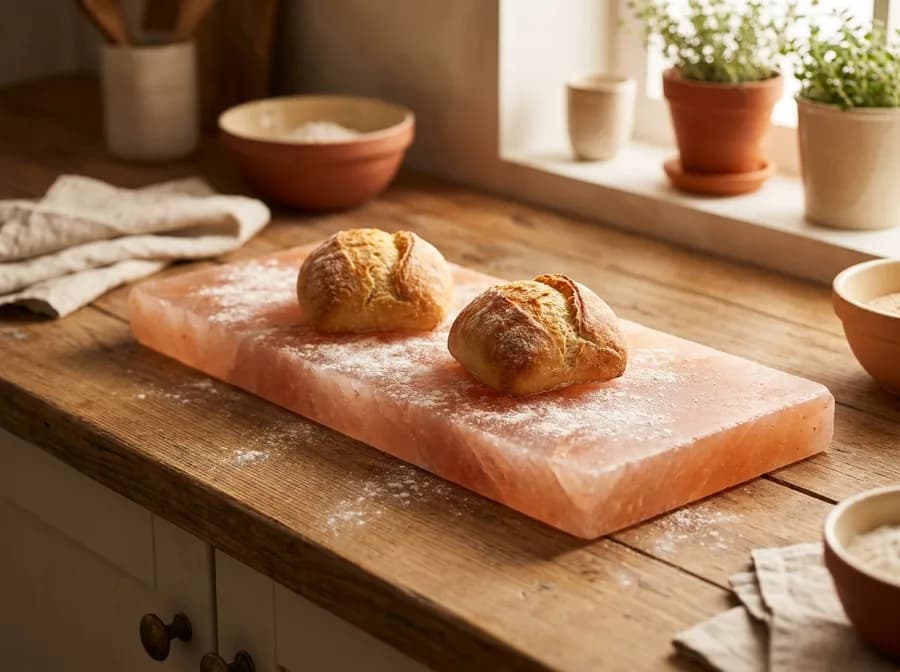
16"×8"×1.5" · 14"×7"×1.5"
Long, oven-rated plank for flatbreads, rolls and roasted vegetables. Preheats with the oven and gives a gentle mineral crust on the base.
Presentation pieces rather than cooking surfaces — chilled or at room temperature, they season food gently as it rests. Strong gift and hospitality lines.
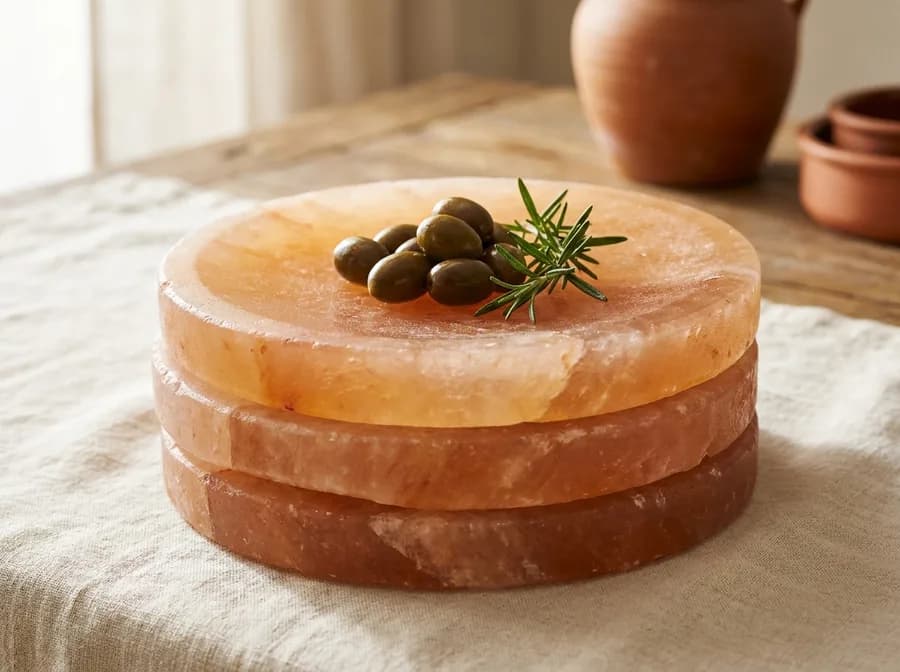
8" · 10" · 12" round
Round presentation plates for cheese, charcuterie, sushi and desserts. Chill for two hours before service for the best effect.

4" – 8" diameter
Turned from solid crystal for dips, condiments and table service. Sold singly or as graduated nesting sets of three.

5" bowl with pestle
Solid salt mortar for crushing spice blends — the bowl seasons the mix as you grind, so no extra salt is needed.

50 ml · 4" square
High-volume gift and hospitality lines, usually ordered in sets of four or six with printed sleeves. Tequila bars are the biggest repeat buyers.
Print this on your retail insert — it is the difference between a delighted customer and a warranty complaint.
Place the block on a cold grill or hob. Never set a cold block onto an already-hot surface — thermal shock is the single biggest cause of cracking.
Low heat 15 minutes, medium 15 minutes, then high. Total 30–45 minutes to reach searing temperature of roughly 260 °C.
No oil needed. Thin proteins take 1–2 minutes per side; the surface transfers seasoning as it cooks.
Leave the block on the switched-off grill to cool for several hours. Never quench with water.
Wipe with a barely damp cloth and scrape residue with a plastic scraper. Soap and soaking will dissolve and ruin the block.
Two inches is the correct specification for direct flame. Thinner slabs of one inch or less heat faster but crack sooner under barbecue temperatures, and are better sold as chilled serving platters. We do not recommend supplying sub-2-inch blocks for grilling use.
No — a dry block transfers seasoning slowly and lightly. Thin cuts pick up a delicate seasoning in a minute or two; longer cooking on a dry surface adds surprisingly little. Wet or marinated foods draw more salt, which is worth printing on the retail insert.
Twenty to forty heating cycles is realistic when customers follow the gradual heating rule. Blocks erode, thin and eventually split — that is normal consumption, and it is what makes this a repeat-purchase category rather than a one-off sale.
Yes. Blocks ship in printed colour boxes with an illustrated heating and care card, optionally with a wooden serving tray or stainless holder. We produce private-label boxes with your branding and barcodes for chain retail.
Each block is corner-protected, foam-wrapped and boxed, then packed in double-wall cartons with rigid dividers and strapped to fumigated pallets. Blocks are the heaviest item per unit in our range, so we build pallets to a lower height to avoid crush damage.
Send us your sizes, monthly volume and packaging requirement. We'll quote per unit with carton dimensions and pallet configuration.
